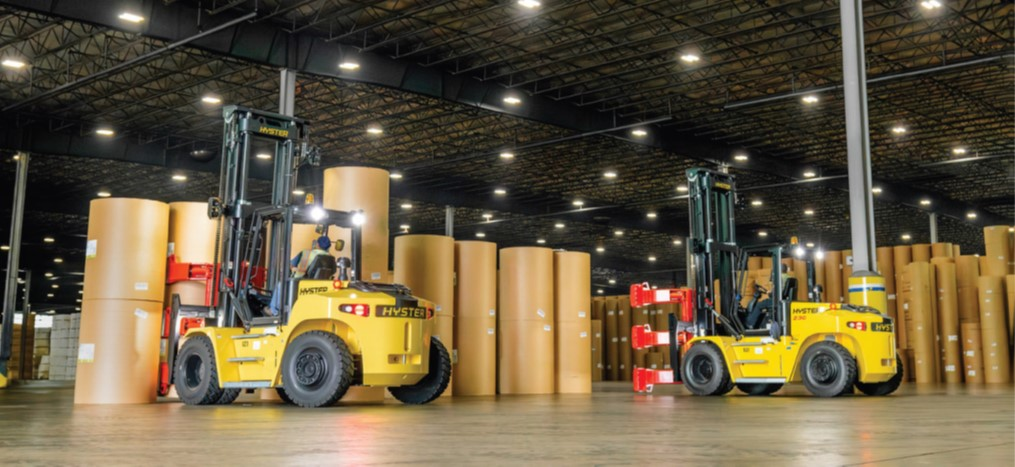

While container handling is all about throughput, breakbulk brings a very different set of challenges. Port and terminal operators are often handling large, delicate and expensive items, from wind turbine blades to mining machinery.
Growth drivers
Across the board, Greenfield Products is seeing breakbulk handling become more challenging for operators.
“The biggest driver we see right now is the increasing diversity and complexity of breakbulk cargo moving through ports and terminals,” says Anthony Calomino, VP of sales. “Wind energy components continue to be important, but we’re also seeing strong demand tied to infrastructure projects, energy equipment, steel and large industrial machinery.”
This is leading to growth in demand for problem-solvers like Greenfield Products, which can customise its products. “As cargo becomes larger, heavier and less standardised, operators are placing more emphasis on engineered solutions that can be tailored to specific lift conditions,” adds Calomino. “There’s also a growing focus on reducing manual rigging, improving load control, and enhancing safety, which is accelerating adoption of purpose designed, customisable handling equipment.”
Kalmar also sees renewable energy as a big driver in breakbulk. “The wind energy sector continues to show strong demand,” says Hans Larsson, application expert industrial, AMEA and Americas. “As wind turbines increase in size, it necessitates a corresponding scaleup in the machinery to handle these larger components effectively.”
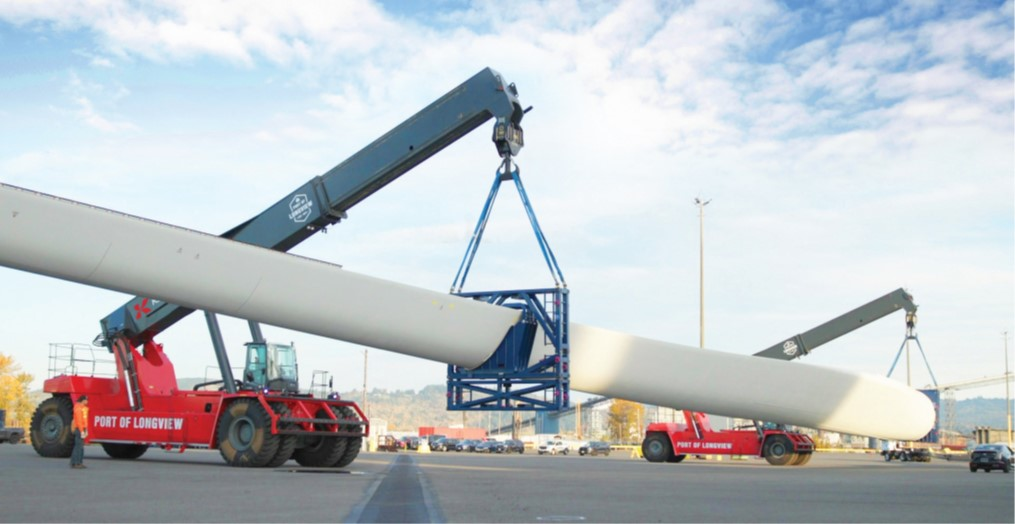
To meet the needs of the renewables industry, Kalmar has partnered with CES to distribute and service CES reachstackers. The CES range has lifting capacities from 120t (264,000lbs) to 380t (837,000lbs) with longer load centres, more outreach and increased lift heights, they are designed for super heavy lifting applications.
Wind energy logistics is the most prominent application for the CES range, as the machines can handle wind turbine towers, nacelles and hubs and offshore components.
Kalmar’s own electric reachstackers can handle up to 45t, while its Super Gloria reachstacker is designed for breakbulk cargo, at 130t. Meanwhile, its forklifts have lifting capacities up to 85t – and electric forklifts up to 33t.
Conversely, Konecranes believes that mining is the main driver for growth in breakbulk handling. “Demand for breakbulk handling equipment is increasingly driven by large project cargo, particularly in the mining sector, while wind related volumes have levelled off,” says Patrik Lundbäck, VP of sales and distribution.
Beyond lifting capacity, Konecranes believes that customers are now prioritising electrification, digital fleet management and advanced safety features. Cybersecurity has also become a critical factor, especially in ports handling military or dual use cargo. “At Konecranes, cybersecurity is built into the entire delivery process, with secure, encrypted connectivity and carefully tested hardware and software to meet and exceed industry standards,” he adds.
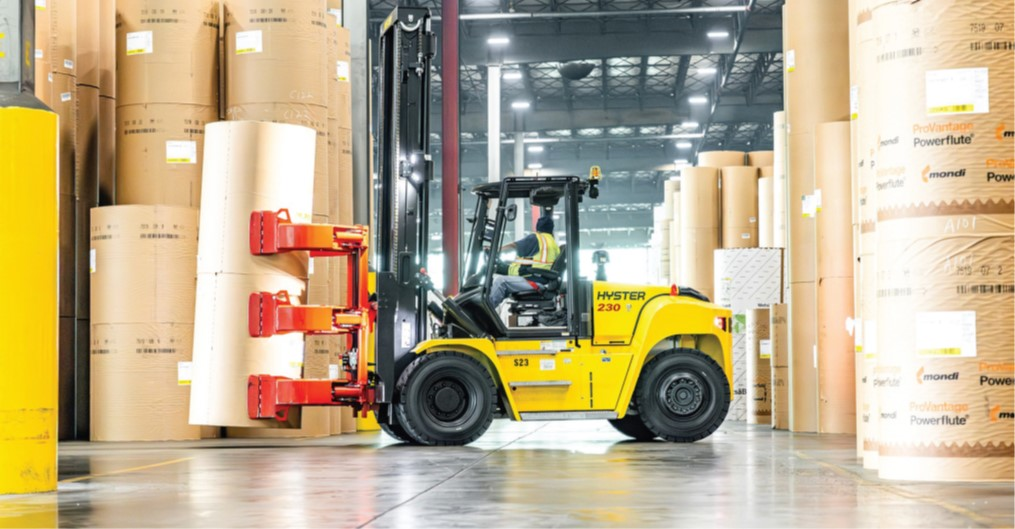
Hyster agrees with Kalmar, that reachstackers are becoming even more highly prized for their breakbulk capabilities. “Especially when paired with tool changers that enable rapid attachment swapping,” says Ricky Hirani, global commercial product leader, big trucks and port equipment.
High-capacity forklifts with quick-disconnect carriages, coil rams or magnets extend this multipurpose capability. “This flexibility helps ports avoid over-investing in single-task equipment, particularly when cargo mixes and volumes fluctuate,” he adds.
Another growing issue is noise emissions, especially for inland terminals or those near cities. “Backup alarms and container landings generate disruptive levels of sound, prompting operators in many parts of the world to explore alternatives such as white-noise backup alarms, which are still audible to pedestrians but are less intrusive to neighbouring residents,” says Hirani. In addition, soft landing spreader features use sensors to automatically slow descent as the spreader nears a container, minimising the sound of metal-onmetal contact.
Space constraints further complicate matters, as breakbulk operations often deploy trucks into tight spaces, even into a vessel’s hull. “Configurations that offer high capacity and height in smaller footprints are increasingly valued,” says Hirani.
He feels that yard density versus cargo accessibility does come with some trade-offs and may require better cargo placement planning. Stacking higher, up to five or six containers high, can free up ground space but can create accessibility issues without the proper equipment. Additionally, when stacking more than four high, the ground conditions must be addressed to prevent tipping. “If the ground conditions aren’t appropriate for higher stacking, ports might have to lay gravel, construct concrete pads or perform ground grading,” he says.
Tracking value
The handling of breakbulk cargo presents unique operational challenges due to its non-standardised nature, varied shapes and manual handling requirements. Unlike containerised freight, breakbulk cargo such as steel, large components and machinery requires precise tracking. Konecranes meets this need through CommTrac, a specialist terminal operating system (TOS) developed by its subsidiary, TBA Group.
CommTrac is designed to manage non-containerised cargo and provide real-time visibility of cargo movements, inventory, and operational progress. “For breakbulk cargo specifically, this visibility is essential, as cargo is often handled in units, bundles or pallets rather than standard containers,” the company says.
By improving accuracy, it can help reduce manual errors. Features such as barcodebased inventory management and mobile data capture allow terminals to track cargo precisely and record events like delays or damage. This enhances operational efficiency and supports better reporting and performance analysis.
Additionally, CommTrac supports consolidation and deconsolidation processes, enabling terminals to manage complex cargo groupings while automatically capturing associated service charges. This helps maximise revenue and ensures that all billable activities are recorded.
Framing the issue
While sales patterns across the market can vary depending on regional investment cycles, the underlying trend is towards larger, heavier and more complex loads, often requiring custom lift planning and specialised equipment. Ports that position themselves as project cargo or heavy lift hubs typically invest not only in crane capacity, but also in access to appropriate below the hook solutions, whether owned, rented or supplied through specialist partners.
“This environment reinforces the need for lifting accessories that can be adapted quickly, certified internationally and deployed with confidence across a wide range of lifts,” says Modulift, a leading manufacturer of lifting beams and frames.
“This makes the selection of below the hook lifting equipment a critical factor in both safety and efficiency. As a result, the breakbulk sector continues to drive innovation in lifting beams, frames and engineered lifting solutions, with an increasing focus on reducing manual handling, improving load control and ensuring compliance across complex lifting environments.”
It sees that frames and spreader beams are now firmly embedded in modern breakbulk operations, particularly where repeatable lifts, sensitive cargo or high capacities are involved. “However, there remains scope for improvement across the industry in ensuring the right lifting equipment is matched to the right cargo,” it adds.
One challenge it sees is inappropriate lifting arrangements still used due to time pressure or limited equipment availability. “This highlights the importance of planning and access to both off the shelf modular beams for standard applications, as well as custom-designed frames and beams for niche or complex loads,” it says.
Where lifts are complex, LMS wireless load monitoring and data logging can be integrated into the lifting arrangement to verify actual loads in real time and support safer lift planning.
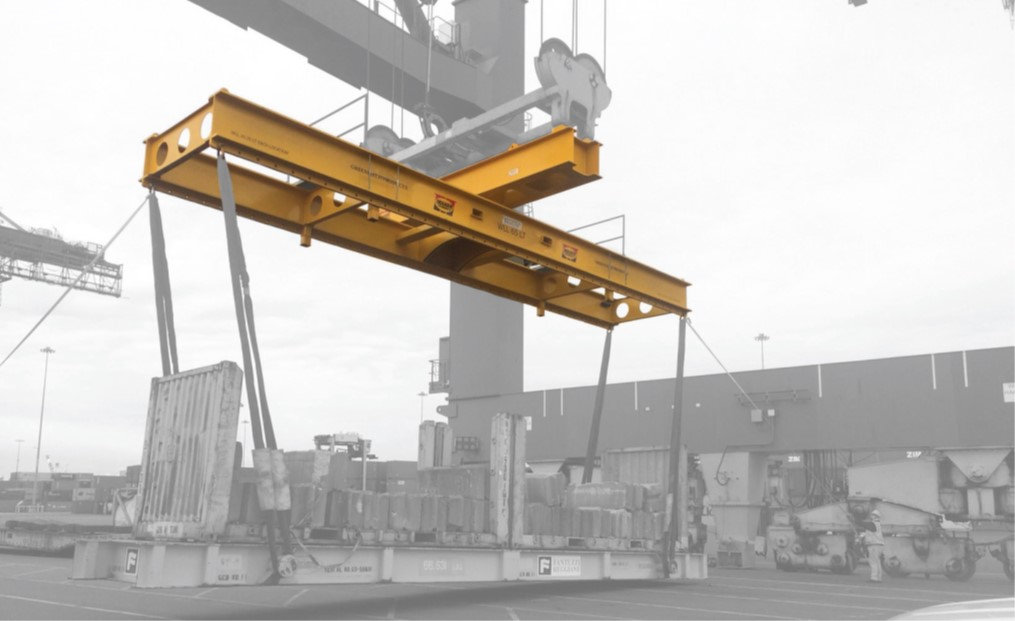
Overall, growth in large-scale project cargo, particularly driven by the energy, infrastructure and offshore sectors, has accelerated demand for purpose-designed spreader beams and frames. They need to be capable of safely lifting fragile, high value components while maintaining controlled load paths and predictable sling angles. For Modulift, this has translated into the manufacture of increasingly high-capacity solutions, including trunnion spreader beams exceeding 1,500t.
“Trunnion-based lifting systems address several key challenges associated with breakbulk cargo,” it says. “By eliminating the need for shackles, they significantly reduce manual handling at height, remove potential failure points and speed up lifting operations.”
Trunnion spreader beams also allow for the use of synthetic slings rather than wire rope, offering a lighter, more cost effective solution while reducing the risk of surface damage to sensitive cargo. “For ports handling repeat heavy lifts, these advantages directly support safer working practices and faster turnaround times,” it adds.
“For delicate, high-value breakbulk cargo, Aberdeen Web polyester round slings and webbing slings provide lightweight handling and surface protection, while pewag lifting points offer secure engineered attachment where dedicated pick-up points are required.”
Modulift believes that the broader shift towards engineered, repeatable lifting solutions reflects a growing recognition across the breakbulk sector that risk is best mitigated through design rather than procedural controls alone.
Launched in 2022, its multi point lifting beam is now established in the project cargo sector. It is designed to support lifts that require multiple adjustable lifting points, making it particularly effective for irregular or elongated breakbulk cargo where load distribution is critical. Its modular configuration allows operators to adapt the beam to suit different spans and constraints, while maintaining controlled sling angles and even load sharing.
Key features include modular, adjustable lifting points to suit varying load dimensions and the ability to work as a lifting beam or semispreader, depending on configuration. It is also suitable for the low headroom environments often found in ports and terminals.
“These characteristics make the multi point beam a pragmatic option for terminals handling diverse breakbulk cargoes, particularly where flexibility and repeatability are required without the lead times associated with custom fabrication,” says Modulift.
Flexibility needed
That same type of flexibility is required in the equipment. To this end, Kalmar offers a variety of different attachments for pipe handling, coils, paper pulps and rollers, and timber.
This is important as its customers tend to be ports that prize versatility. “Small and mediumsized ports and terminals normally handle many different kinds of cargo, so they benefit significantly from Kalmar’s ability to easily change attachments, providing them with an excellent, versatile solution,” says Larrson.
Part of the challenge is the variation in breakbulk handling. “Breakbulk operations can be unpredictable,” says Hirani. “One week, a ship may carry steel coils, and the following week, wind turbine components. These issues emphasise the need for specialised equipment with forks and other lifting attachments.”
He believes that configuration through specialist attachments, compact designs, electrification strategies and fleet mix adjustments can unlock productivity, safety and sustainability gains that ripple across terminal performance. This is vital when work in intense industries like breakbulk often requires special consideration to reach productivity targets.
“Variability of load types, regulatory compliance, product and vessel damage, increased costs and longer shipping times are all daily issues for breakbulk applications,” he adds.
Hyster produces forklifts, with capacities up to 48t, that can leverage specialised, flexible attachments to handle non-standard loads, or can be customised to unique challenges where needed.
In addition, handling breakbulk cargo amplifies the risk of damage to both the loads and the truck. If a load isn’t properly secured or if a clamp applies too much pressure, goods can be crushed or scraped. When irregularly shaped materials, such as long steel pipes, are moved without reinforced masts, intense torque can cause severe wear or structural damage to the truck.
“Real-world examples show how easily this can happen,” says Hirani. “In one case, a coil ram with a slightly protruding washer on its head caused thousands of dollars in damage to steel coils simply because the attachment wasn’t configured correctly.”
These issues highlight the importance of configuring equipment with specialised attachments such as clamps, reinforced masts or coil rams. It is very much about the right tool for the right job. “At the same time, terminals need flexibility, emphasising the ability to quickly switch attachments so a single truck can handle the diverse range of cargo typical of breakbulk operations,” he adds.
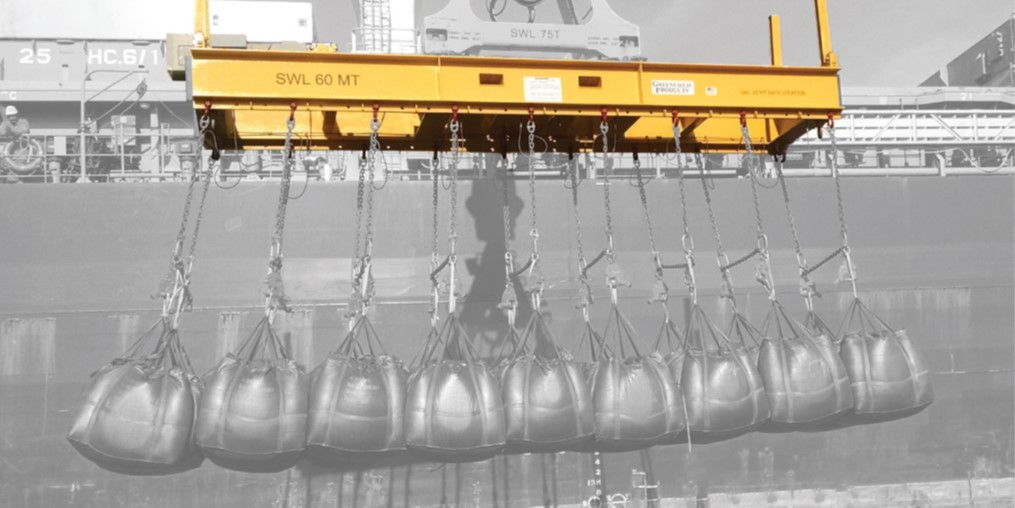
Versatility is intrinsic to the business model of Greenfield Products, which prides itself on providing tailor-made solutions. “At Greenfield Products, our latest advancements aren’t about launching a single, fixed product,” says Calomino. “They’re about expanding our ability to deliver custom engineered breakbulk handling solutions.”
The company continues to develop modular spreader bars, strongbacks and forklift mounted systems that can be configured to handle a wide variety of breakbulk materials, from steel and project cargo to containers and oversized freights.

“What sets us apart is our design engineer build approach,” he adds. “Instead of asking customers to adapt their operations to standard equipment, we engineer solutions around their cargo, lift requirements and site conditions. That flexibility allows our customers to safely handle diverse materials using a single engineered platform, which improves efficiency and utilisation.”
It is not surprising that ports, terminal operators, stevedores and heavy lift logistics providers that routinely handle non-standard cargo are its core clients. “These customers face constant variation in load types, weights and handling requirements, which makes customisation essential,” he says.
Clients work with Greenfield because they need equipment that can adapt as their cargo mix changes. “Whether they’re handling steel products one week and project cargo the next, our customers value solutions that integrate seamlessly with their existing cranes and forklifts while giving them the flexibility to handle multiple commodities safely and efficiently.”
Outlook
Breakbulk remains a vital segment for Kalmar. “We are committed to collaborating closely with our customers to provide tailored solutions for specialised cargo handling that evolves alongside their specific requirements,” says Larrson. He also notes that customers are increasingly prioritising electric solutions. “Kalmar has a long experience in developing electric equipment and we continue to develop our offering,” he adds.
Greenfield Products is feeling good about the future too. “We’re optimistic about continued demand for breakbulk handling equipment, particularly custom and application specific solutions,” says Calomino. In his eyes, terminal operators are looking to increase throughput and flexibility without making major infrastructure investments. “That puts a premium on equipment that allows them to handle a wider range of cargo using existing assets,” he adds.
“Greenfield is well positioned because we don’t just sell products – we work as an engineering partner. As cargo profiles continue to evolve, the need for adaptable, safe and efficient handling solutions across multiple commodities will remain a strong driver for the breakbulk market.”
For Modulift, further growth in the breakbulk sector is closely tied to global investment in infrastructure, renewables and large-scale industrial projects. “As cargoes continue to increase in size and value, the emphasis on engineered lifting, regulatory compliance and risk reduction is only likely to grow,” it says.
It feels that, for lifting equipment manufacturers, this points towards continued demand for modular systems that offer flexibility without sacrificing engineering integrity, alongside specialist solutions for abnormal or one off lifts. “From a wider industry standpoint, ports and terminals that prioritise safe, efficient breakbulk handling through the correct use of lifting beams and frames will be best positioned to attract high value project cargoes in the years ahead.”