
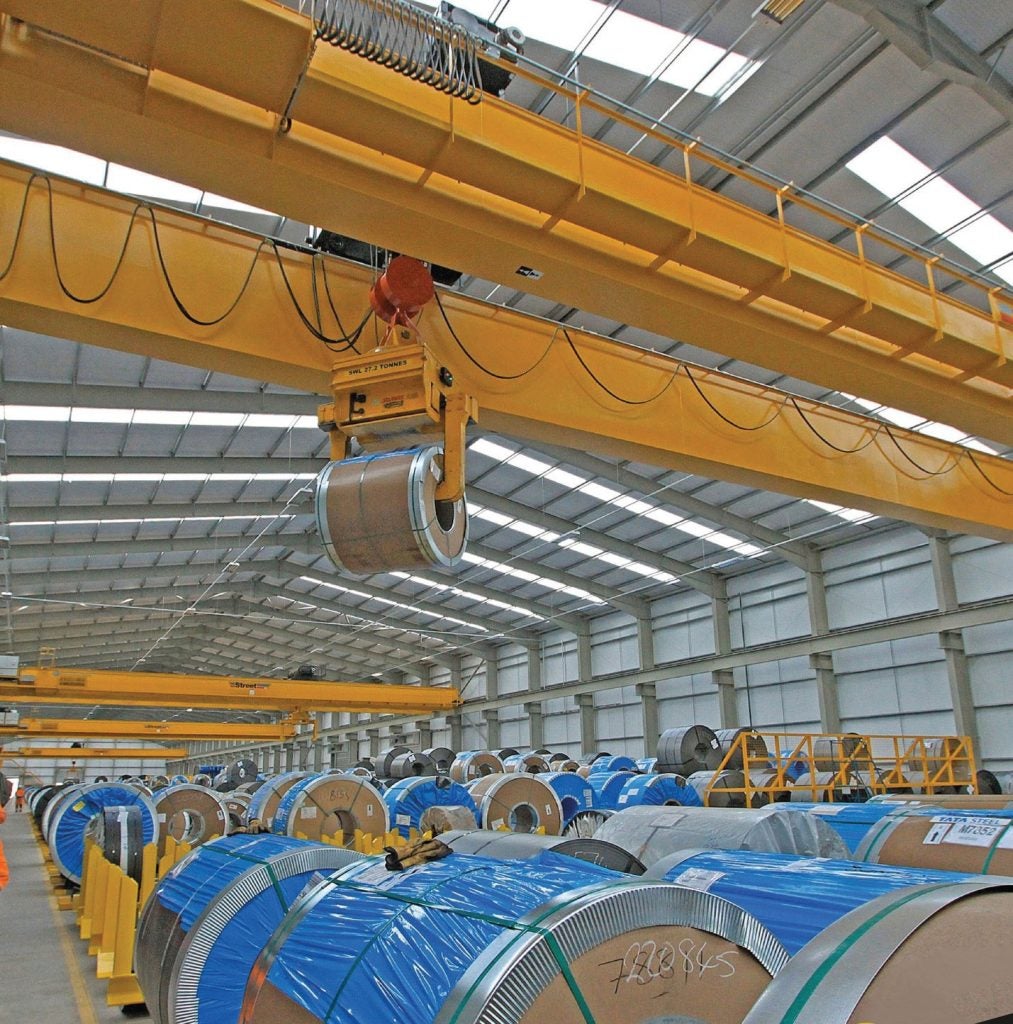
You may be operating a huge plant with multiple overhead bridge cranes of high capacity carrying out complex and variable lifts. You may be operating a small manufacturing plant with an overhead monorail that performs the same simple task over and over again. Or you may be operating something in between, with never the same lifts running twice and an operator having to decide the start and endpoint of each load with no easily discernible pattern between them. All of these systems can be automated, fully or at least partially.
A plant does not have to be big. It is a myth that large, high-capacity overhead gantry or double-gantry cranes are the only ones worth the trouble and expense of automating.
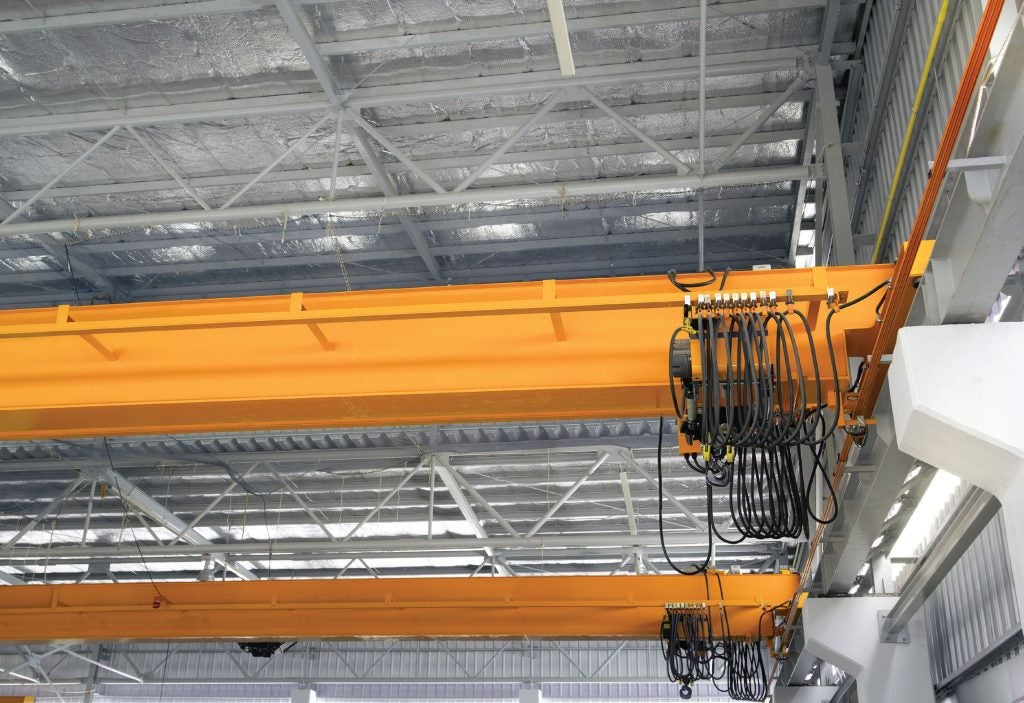
Light monorail and enclosed rail crane systems can be automated. Even simple chain hoists can be fitted with variable speed lifting and lowering, geared limit switches, encoders and load measurement devices. For horizontal travel, monorails and runways can be given variable speed tractor drives, encoders and travel limit switches to make it all happen. Onboard control system signals from PLCs – programmable logic controllers – can connect offline equipment to the automation, either through wires or wirelessly.
Demag say that their KBK light crane monorail systems can help automate lifting processes up to 2t capacity. Used with DC electric chain hoists they offer a wide range of options: the system can include automated branching components such as curves, track switches, turntables, and interlocks, which operate at the press of a button from an operator – or automatically as directed by that PLC. Either way the load is sent to the particular destination that is required. It is a modular system, and the possibilities, say Demag, are practically endless. Just as an example, if each load is identified with a RFID tag or similar, the PLC could direct it along whichever branchline is needed to its proper destination – and can note that on an automated warehousing programme to show how much stock is available and where each item is stored.
Getting the job done
In any plant or facility there will be many processes and systems that are needed to get the job done. They do not all have to be automated. Those most suited can be chosen; those that most need human intervention can be left alone. Rick Emmer is business development manager for Columbus McKinnon. “Deciding which processes to automate can be tricky,” he says. “The first two questions you should ask yourself are, ‘What are the most important processes to our business?’ and ‘What are our most highvalue processes?’
“Automating the most critical processes in your facility is a good place to start. By automating key processes, you can ensure that they stay up and running efficiently. This increases uptime and, ultimately, improves the productivity of that process. And, by automating key processes, you are in a better position to scale operations to grow the business.
“The other important thing to keep in mind is that automation doesn’t have to be complicated,” he adds. “Integrating a few automated solutions into your system can go a long way to create a safer, more streamlined process. Start small and, once you experience the benefits automation can provide, you can build on that automation framework to further improve operations.”
James Salter is project manager at Sheffield crane manufacturers Street Cranexpress. “There are of course many possible degrees of automation,” he says. “They can range from operator-controlled start and destination points movement with automated sway control en route, via preprogrammed pic-up and set-down points, to fully integrated Industry 4.0 systems in which crane operation is a seamless part of the process.”
It is quite possible that you have automation in your plant already and have not realised it. We tend to think of automation as a machine that makes the operator redundant; many levels of it, though, simply render his or her task easier. Sway control, vertical pick-up, precision preset positioning for pick-up, set-down and no-fly zones have for some years been part of so-called ‘smart features’ for hoists.
They certainly count as automation, even if the operator still hooks and unhooks the load himself and handles the overall movement controls, while the fine tuning of them – to give sway control, smooth accelerations and decelerations and so on – are handled by the automation. You could call it hidden automation and it contributes, as do greater degrees of automation, to smoother, safer and more efficient handling of materials.
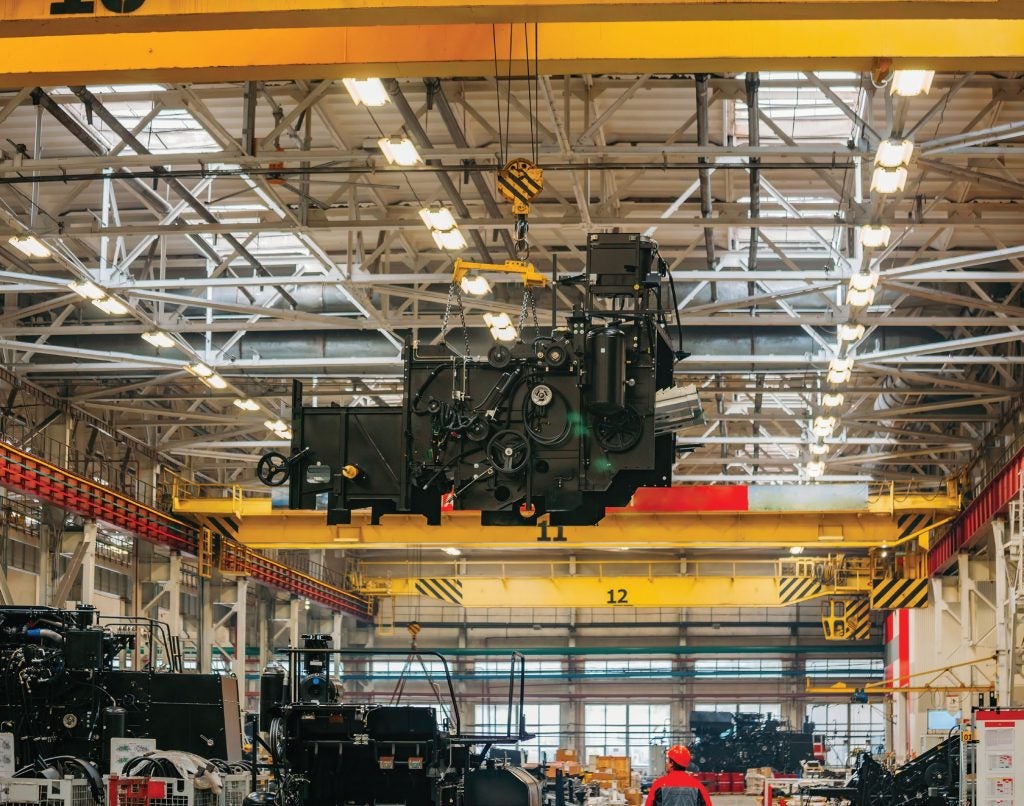
Thus, Konecranes have their SMARTON – they call it the crane with a brain. It is a heavy-duty overhead crane of up to 250t capacity with one lifting trolley and 500t with two. It has smart features built in. Among them are sway control, hook centring, snag prevention – which stops all movement if the load catches on something. There is shock load prevention, prevented areas (no-fly zones), slack rope prevention and target positioning as well. Columbus McKinnon have, under their Magnetek brand, their Intelli-Guide family of automated crane systems. It includes Intelli-Protect, which does no-fly zones; the Intelli-lift auto-correction system, which detects a load misalignment or snag condition and alerts operators with a visible and audible warning before a dangerous situation occurs; and Intelli-Guide itself allows automated, pre-programmed or remote-controlled movement of loads to specific, designated locations in a facility.
Quick and easy
The benefits of automation in lifting are many. “Think speed; optimisation of material flow; accuracy of positioning; efficiency, both in energy use and time; reduction of the need for skilled crane operators, who are in increasingly short supply; safety; the ability to monitor data for predictive maintenance, and so on,” says Salter.
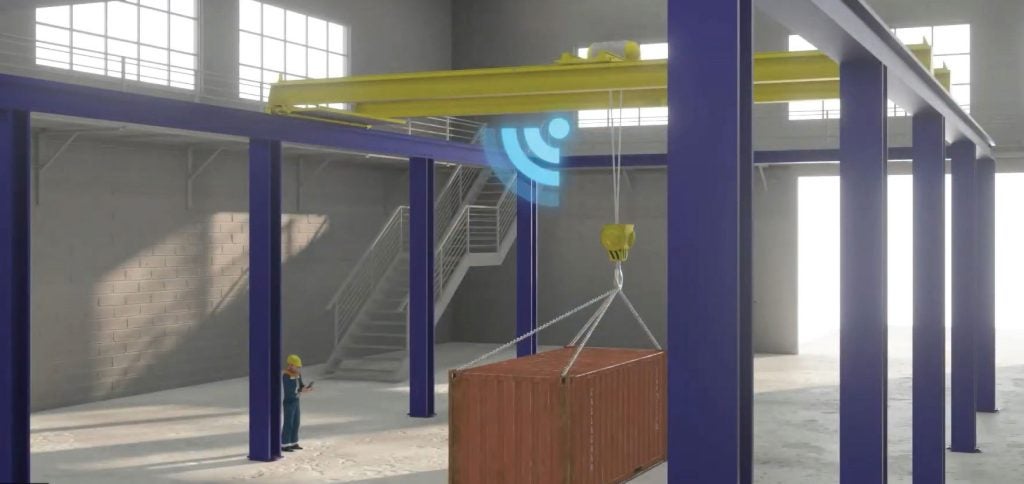
“Regardless of the sector in which your company operates, the level of competition is likely to be high, and labour costs will increase,” say Crosby Airpes. “Having an automatic crane will make it possible to handle heavy loads efficiently, reduce operating costs by requiring fewer personnel and streamlining operations, increase productivity by increasing the efficiency and effectiveness of the work performed and improve safety at work by incorporating systems that automate your cranes, especially when working in hazardous areas or with dangerous materials.” They add reduction of damage to loads caused by handling and the ability to optimise inventory management. There are probably others in the list that we have not thought of.
So, we can consider automation as being a good thing. The next question is whether to go for full automation or a semi-automated system.
Full automation is almost self-defining – the machine does everything. It moves to where the load is, picking it up and attaching the load to the hook or lifting device without human intervention. It also raises the load, moves it to its preprogrammed destination, lowers it accurately and precisely into the correct position, then lets it go and starts all over again with the next load.
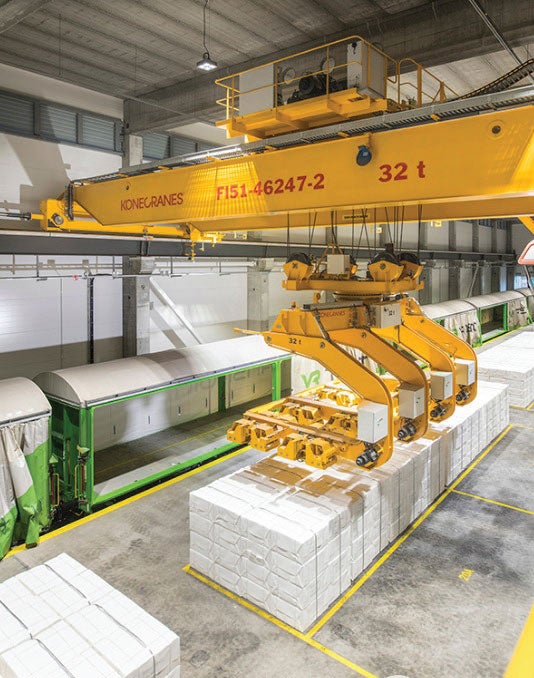
Semi-automation involves some kind of operator input. Demag defines it thus: “Semi-automation is a process that has an automated component but requires some operator interface, normally to begin or end the process.”
Intuition tells us that repetitive actions are the most suited to being automated or semi-automated, and this is semi-true. “Automation is useful for highly repetitive processes and the storage and retrieval of materials. Automated cranes have no trouble coping with the monotony of repetitive work, such as assembly,” say Konecranes. “They keep on working without distraction or fatigue which helps reduce the risk of accidents. In warehouses, crane automation increases accuracy and efficiency of stacking and retrieving items. Automated cranes know right where to find things. In addition, they optimise storage space and logically organise storage based on shipping schedules.”
But – and nothing is absolute in this world – “some crane users,” add Konecranes “prefer maintaining human control over equipment in their facility.” Semi-automation provides that: an operator stays at the controls to override automated operation to interrupt a pre-programmed crane path, for instance.
There is an important distinction to be made here between full and semi-automation, and it is about safety. We have pointed out already one safety advantage – namely, that automation removes the need to have people in the danger zone. “Automation can also be used strategically to remove personnel from dangerous or high-risk process areas or those that pose ergonomic challenges. For example, if you’re transporting molten metal or moving a heavy object repeatedly, automation can help keep your employees safe and reduce fatigue. Then, they can be redeployed to other areas within the facility to increase production where needed,” so says Emmer of Columbus McKinnon. But there is more to it than that. If your lifting system is fully automated, personnel not only can be kept from under a possible load path – they must be kept away.
Premium Industrial Group is a Quebec company specialising in industrial lifting equipment who design, manufacture and install overhead cranes. They explain it thus: “In a semi-automated system there is a human operator, and that operator is responsible for his load at all times, even when the equipment switches to automated mode. In fact, even if he is not in control of the operation in progress, he must be ready to intervene at any time by regaining control of the load. For example, in order to prevent an accident, he must be able to press the red stopreset button (commonly referred to as the emergency stop), which will temporarily disable the automation.”
But for a fully automated overhead crane, there is no operator. Safety must, therefore, be managed in a very different way. “The environment itself has to be made completely safe,” says Premium Industrial Group. “This means that no one will be able to circulate in the area of the automated crane while it is in operation. In fact, when someone enters the area, the entire system stops and doesn’t restart until the person has left.”
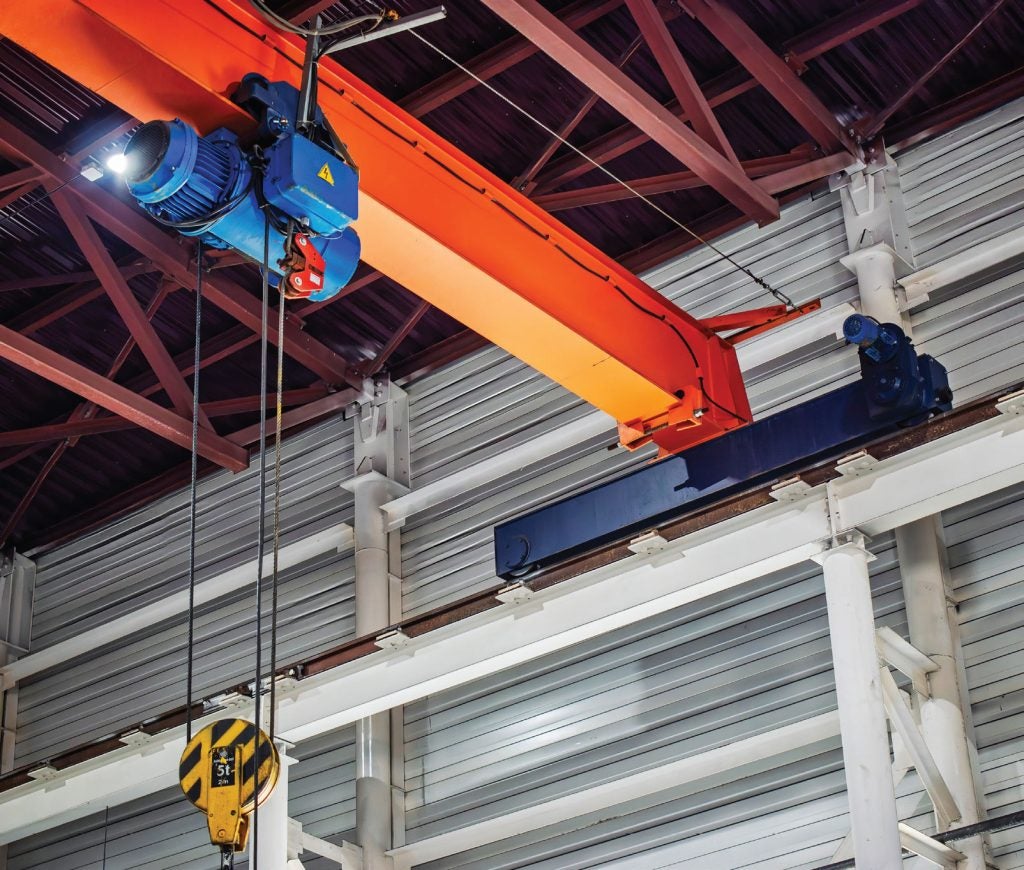
Demag echo the point: “An automated process typically begins with both a visual and audible warning letting the operator and others know the process has begun. Areas with automation are always protected from entry by personnel with fences, gates, or sensors to prevent entry or to stop the process if anyone enters. If loads must be transported above personnel, a screen can be installed under the crane or monorail for full protection of those under the path. The automation controls can be tied into other plant equipment to ensure that an automated process is always safely completed.”
Taking full advantage
At this point we should mention the elephant in the room. It is rather a large elephant – AI. On the face of it crane operations would seem an ideal application for AI. It could work out for itself the most efficient routes, speeds, order of tasks and the rest, carry them out, and integrate the whole of that into the workings of the entire plant. The benefits and the savings would seem immense. In practice, it hasn’t yet happened – and there appears at present little prosect of it happening soon. The reason is the one we have been discussing: safety. Overhead lifting is inherently dangerous.
The unique feature of AI is that human beings do not understand its decision-making: the whole point of AI is that it makes its decisions without referring to us. It works out its own rationales; and does so quite independently from the primitive carbon-based life-forms that have created it. And it does not bother to explain them. We do not, and we cannot, know how it will behave in any given station, let alone in an emergency. Consequently there is, in this area at least if not elsewhere, little appetite for entrusting the well-being, perhaps even the lives, of workers and passers-by to the unknowable workings of a silicon chip.
Salter of Street Crane Express puts it succinctly: “As far as I know AI is not yet part of lifting automation. It would be difficult to confirm its safety rating.”
Automation costs money. The more complete the automation, the more sensors and control systems are required. On a simple hoist, smart features come with very little up-front costs; no longer expensive add-ons they are now supplied almost by default, and economies of scale in production and the general reduction in costs of digital equipment have made them all but standard. Full automation, however, costs more. As Demag point out, additional mechanical components are needed and a human operator, so these systems can cost significantly more than semi-automated systems. By no means do all of the return on investment come from reduction in labour costs. Although it is true that automated cranes take over tasks that would otherwise require manual labour, that may not be where the greatest savings accrue. “When people hear ‘automation’, a common assumption is that automation technology will replace personnel.
This doesn’t have to be the case,” says Emmer. “While automation may replace specific jobs or positions within a process, it does not need to eliminate the people themselves. Automation gives you the ability to redeploy personnel to different tasks or operate other machines.”
The redeployed labour may be contributing to more value added jobs. “With automation increasing throughput, employees can work on steps further along in the process to keep increased production running smoothly.” So savings come also from other benefits of automation.
Automated cranes can operate 24/7, with breaks only for planned maintenance – which can be better planned and integrated using predictive maintenance, yet another aspect of the big data that goes with automation. Speed is increased, reliability is increased and accuracy is increased, with benefit to the quality of the end product.
Product damage is minimised; so too is downtime of equipment. In a competitive world, every advantage becomes important and automation offers just that.


