

Once upon a time, cranes were controlled by someone pulling levers. The levers were on the crane, in a cab at its base or, for a gantry or overhead crane, in a glazed cabin high up on the bridge-girder itself and as often as not moving along with the bridge itself as they skilfully manipulated their load. It might have been lonely, draughty and cold up there but it did at least give them a good, if distant, view of what they were doing. If the crane and load jerked, it was their fault; if it swayed, it was their fault; if it set down a metre or two away from the desired position, that too was down to them. It was an extremely skilled job.
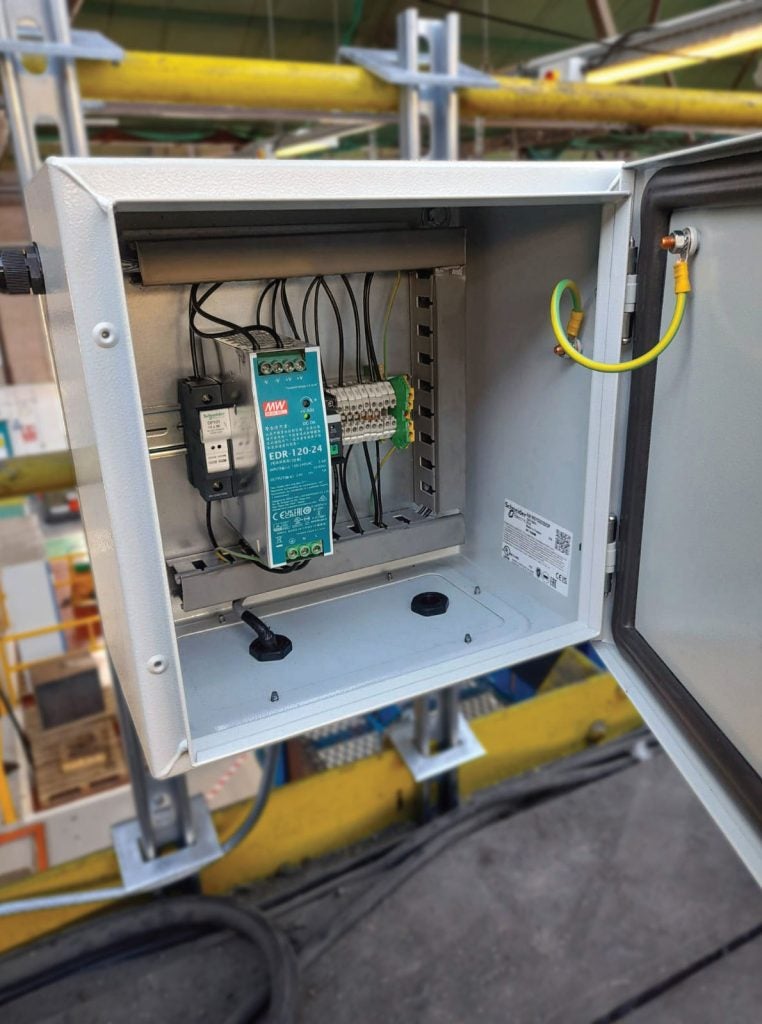
Today, they are more likely to be pushing knobs than pulling levers. They can be standing below the crane or walking along with it, attached to it only by a cable with a pendant control box that they are holding; or not physically connected to it at all, but communicating by wireless remote control.
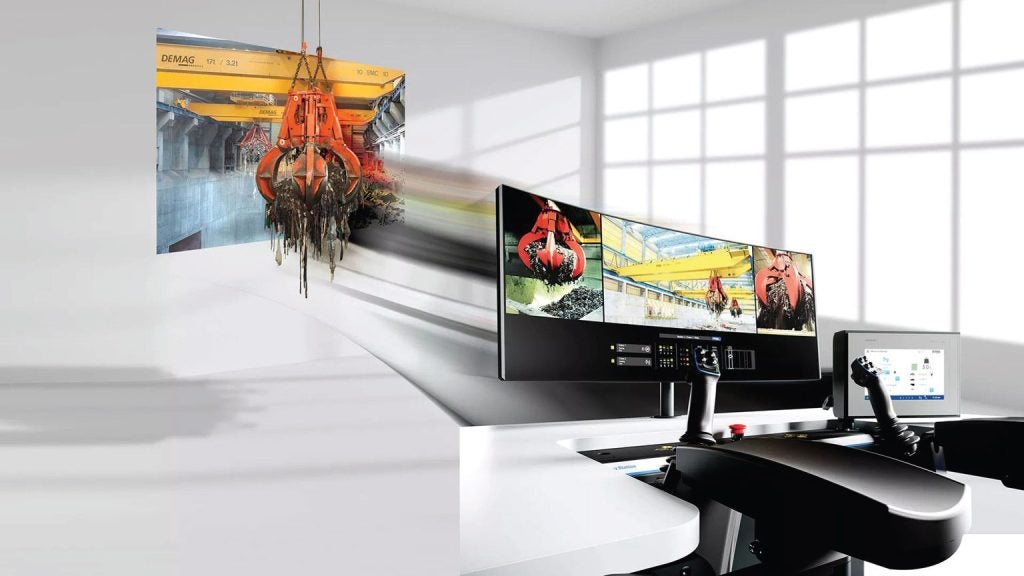
Nor do they have to be near the crane. They can be perfectly comfortable in a warm office some distance away, manipulating a mouse or a joystick or a keyboard, their view of load, hook and crane provided by screens in front of them fed by half a dozen video cameras mounted at various points on the crane.
Control systems are digital now, and they offer many more possibilities. Being digital, we speak in digitalese, of human-machine interfaces rather than knobs or levers. Konecranes divide them into four basic systems: pendant control; radio control; control from a traditional crane-mounted cabin; or control from a remote operating station.
Every crane operator needs their lucky pendant
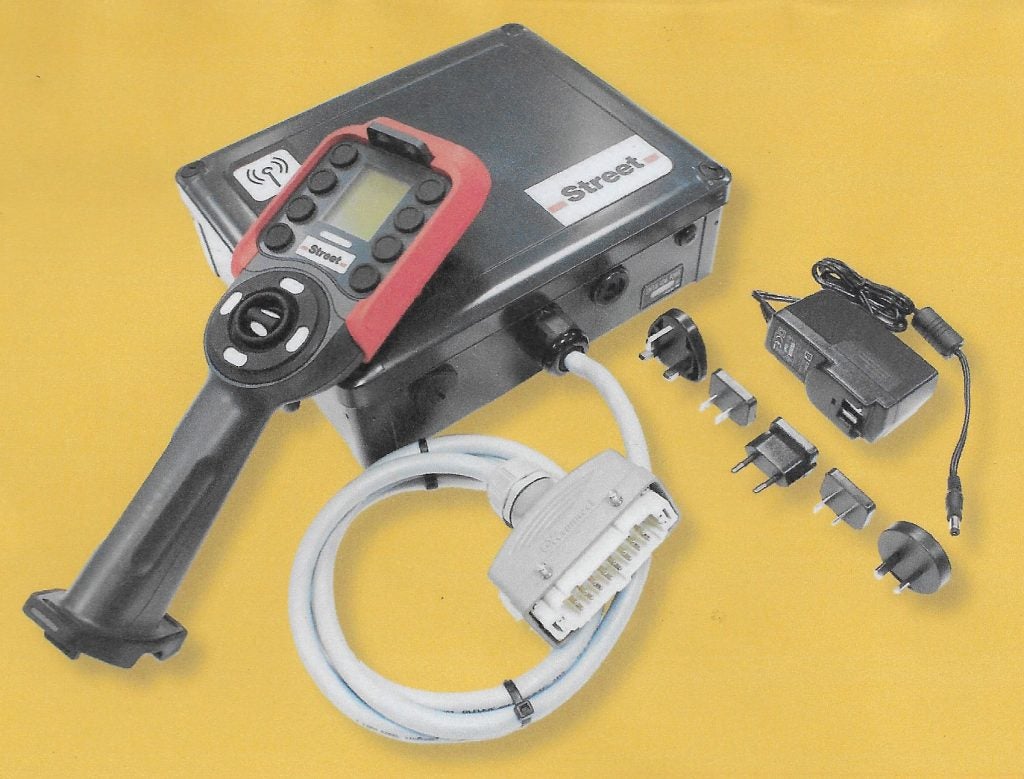
Pendant controls may seem traditional to the point of obsolescence: why have your control-box tied to the crane when it could just as easily be connected to it wirelessly?
But pendant control still has its adherents and its uses, and still sells well. Simplicity is one of its selling points. “There is still a market for pendant controls,” says James Salter of Street Cranexpress. “They are still cheaper than radio remote systems, though prices for the latter have come down a lot in the past ten to 15 years; that price drop is probably due to more manufacturers entering the populated market. But cranes with smaller footprints tend to offer less of an advantage for radio as the working envelope is smaller.” This would seem a partial reversal from the early years of wireless control, when reliability of signal reception faded rapidly with increasing distance. But pendants have a more fundamental advantage: “Some environments will not allow radio technology due to interference in critical plant or machinery. And in this application a pendant controller would be used.”
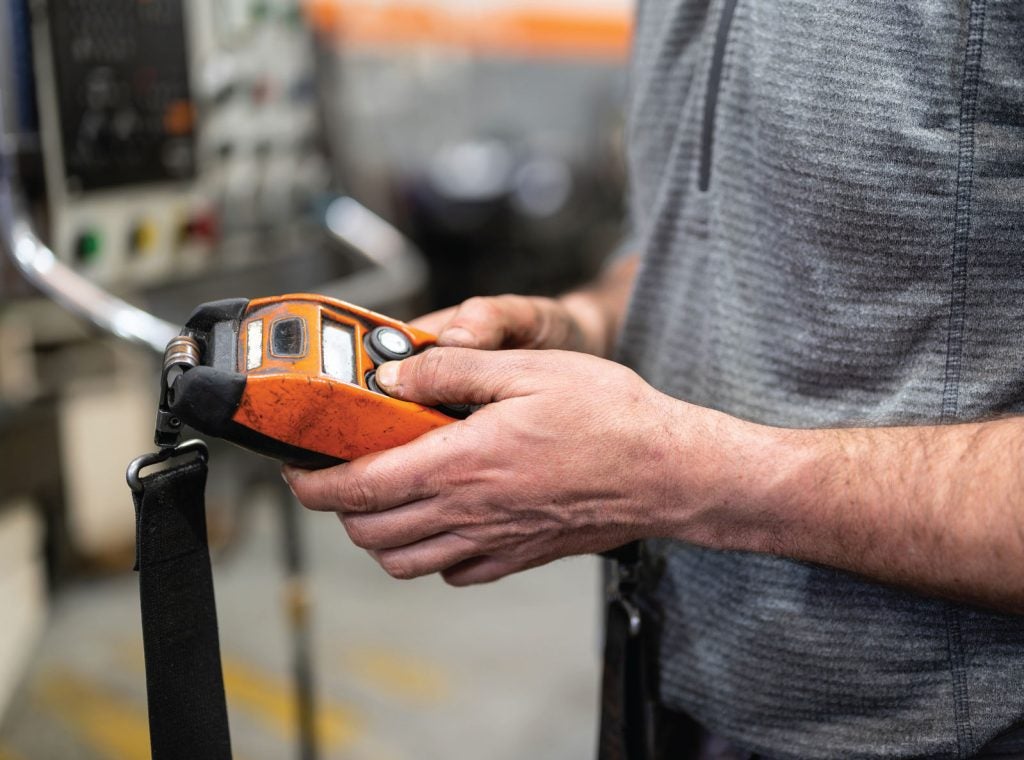
Pendant controllers today are digital reincarnations of the old-fashioned systems. They offer in particular smoother operation and more variable speeds; and they do this because of the fundamental revolution in control systems that has come about through variable frequency drives. Digital control systems of all types almost all share one or two basic technologies, and it is worth briefly surveying these to get some understanding of what they do. One of those technologies is the variable frequency drive.
If you have an electric motor that runs on DC (direct current) is easy to control. To make it go faster, you increase the voltage; to slow it down, you decrease the voltage. But if your motor runs on AC (alternating current), as the vast majority do, then increasing the voltage will have no effect. The speed of an AC motor is tied to the frequency of the alternating current, which in the UK and Europe on the mains supply is 50Hz (cycles per second) and in the US is 60Hz. To control the speed of an AC motor, therefore, you need to change the frequency of the alternating current that is supply – and until recently this was far from being easy.
Black boxes that achieve this are called Variable Frequency Drives; they first emerged in the 1980s but only in the past couple of decades have they become reliable, widely available and mainstream. Cranes fitted with it have infinitely variable speeds (as opposed to the fast, slow or stop options of the past), and not only variable speeds but precision inching travel which helps deposit the load in exactly the desired position.
“Variable speed drives are used to offer speed and torque control of hoist and travel motors,” says Salter.
“They are used a lot more now due to the favourability of their cost, reliability and operation. They offer a more flexible speed control, which can be tailored to suit a cranes operation.” Other advantages follow from that: “Variable speed drives also prevent harsher mechanical actions on components such as gears, wheels due to the softer start and stopping. For safety reasons, hoist motors require additional speed feedback (usually via encoder) and this is why more basic cranes will still have DOL (direct online) control.”
Maintaining direct control at all times
Digital control systems all rely on communication: data, speeds, positions, loads and the like must be passed from sensors to controllers and back to motors, actuators and safety cutouts. This would lead to a maze-like plethora of wiring between them, which is undesirable, especially in a moving overhead crane where distances between components varies and is undesirable. Happily, there is a way round this. Manufacturers’ catalogues contain frequent reference to CANBUS; and this is the second of our near-universal digital technologies. It is a method of passing multiple channels of data along a single two-wire cable. Each component needs to be connected to only one cable. The gains in simplicity, reliability and costs are therefore considerable.
The CAN part of the name stands for Controller Area Network, which is a reasonably understandable phrase for what it does. (The ‘bus’ is electrical engineer-speak; very crudely, it means a wiring system.)
CANBUS offers a way of transmitting a large and varied amount of data and communication over a small number of cables. They do, however, need processing electronics to translate this communication into machinery outputs. CANBus uses two wires and pulses, the voltage difference across the wires is measured and processed as data; this data is further processed and converted to outputs.
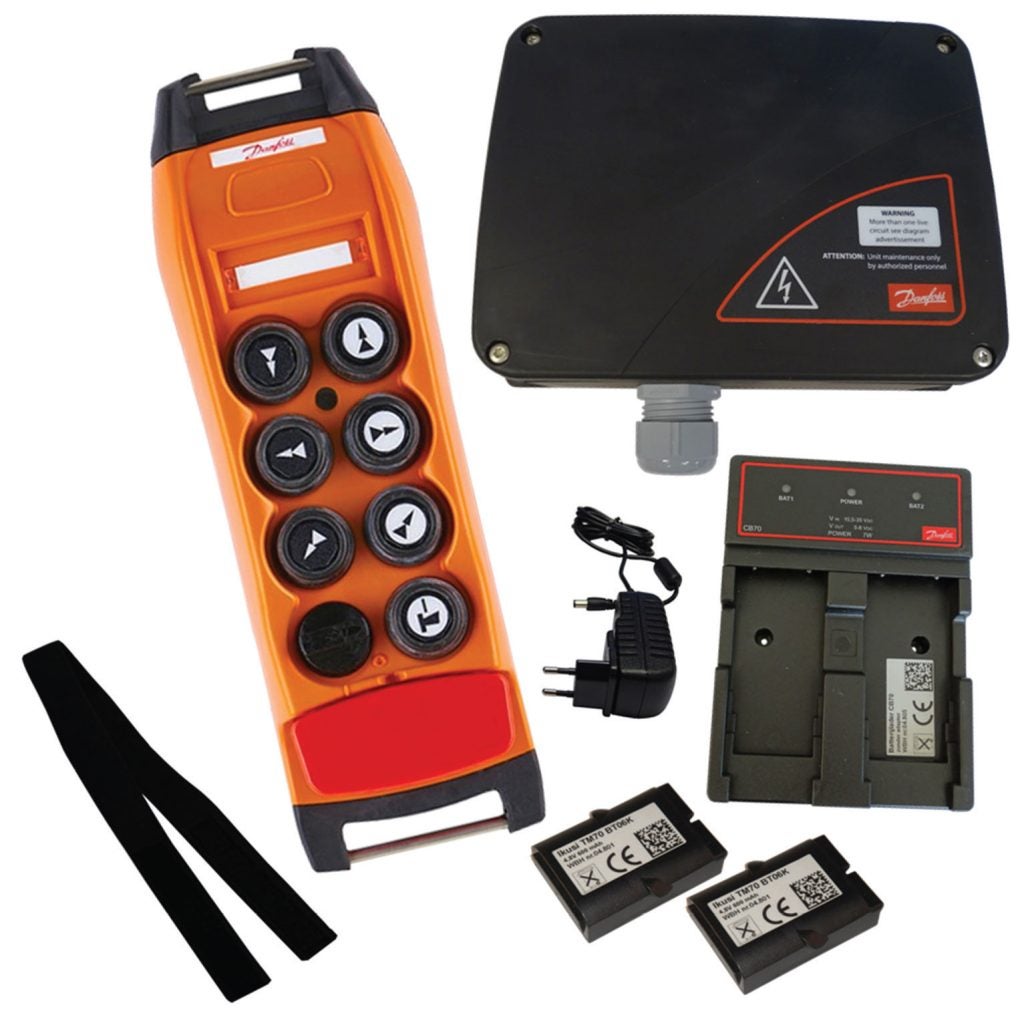
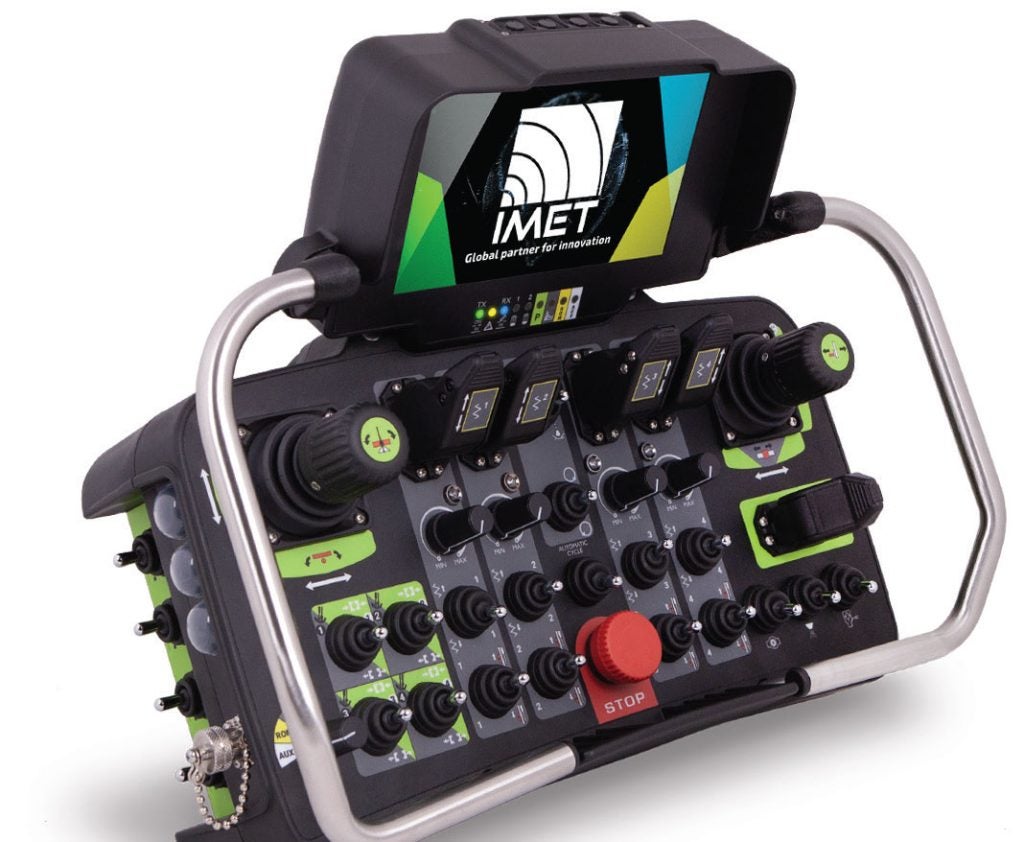
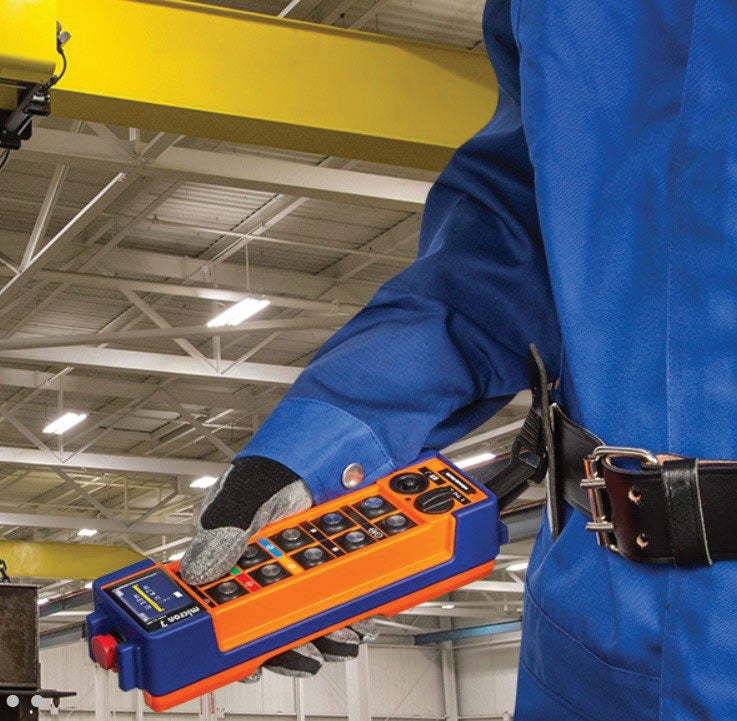
So, given variable frequency drives and CANBUS, what is available in the way of control systems? We have spoken of pendants; the next obvious step is wireless remote control. The hand units of these often resemble those of pendants: buttons or joysticks, more or fewer of them depending on how many functions are to be controlled, in a toughened casing that is held in the hand or supported at waist-level by a neckband that has the advantage of leaving both hands free but has the disadvantage of being universally labelled with the unglamorous name of ‘belly-box’.
Buyers of such systems are spoiled for choice. Among manufacturers, Columbus Mckinnon have their the ZLTX Radio Remote Controls, introduced last summer. HBC-Radiomatic, Hetronic, Autec and IMET are all major players, as is the company formerly known as IKUSI, which is now Danfoss. Operating frequencies for crane radio control vary worldwide. In the UK, crane controls typically operate in the 433MHz UHF band; in the US, 915MHz is common; but 2.4GHz is the frequency for global compatibility. Within those bands, many systems use automatic frequency hopping technology to avoid interference and to allow multiple, simultaneous crane operations.
Street Crane’s Sabre system is one that uses 2.4GHz frequency, which allows the operator to deploy the same solution worldwide and enables group standardisation for operator familiarity and spare parts commonality. Sabre also uses frequency hopping to allow up to 50 systems to run simultaneously.
Steady and guaranteed communications are critical to safety
Safety is a major consideration here. Any system – in particular any wireless remote control system – must be certain of giving uninterrupted communication between operator and crane. The degree of certainty is measurable and can be given a number: it is known as the Performance Level, or PL, number. It is laid down in ISO 13849-1:2006 and it defines the ability of safety related parts of control systems to perform a safety function under foreseeable conditions. PL-a is the least reliable; PL-e is the highest. A rating of PL-d means that the probability of dangerous failure in any hour of use lies between .00001% and .0001%.
Cattron are major makers of wireless control systems, offering both belly-box and hand-held control units. “The minimum safety requirement for a crane remote control system will typically be between Performance Level c and Performance Level d ,” says the company, “with most electric overhead travelling cranes falling into a PL-d category. PL-d can be achieved with a category 3 (dual channel, two microcontroller) system.”
Their product lines include the Remtron system, which meets PL-d safety standards. The Cattron Control line offers a full range of handheld pushbutton to full-sized standard or engineered-to-order bellybox style transmitters that allow for combinations of switches, paddles and joysticks for crane applications.
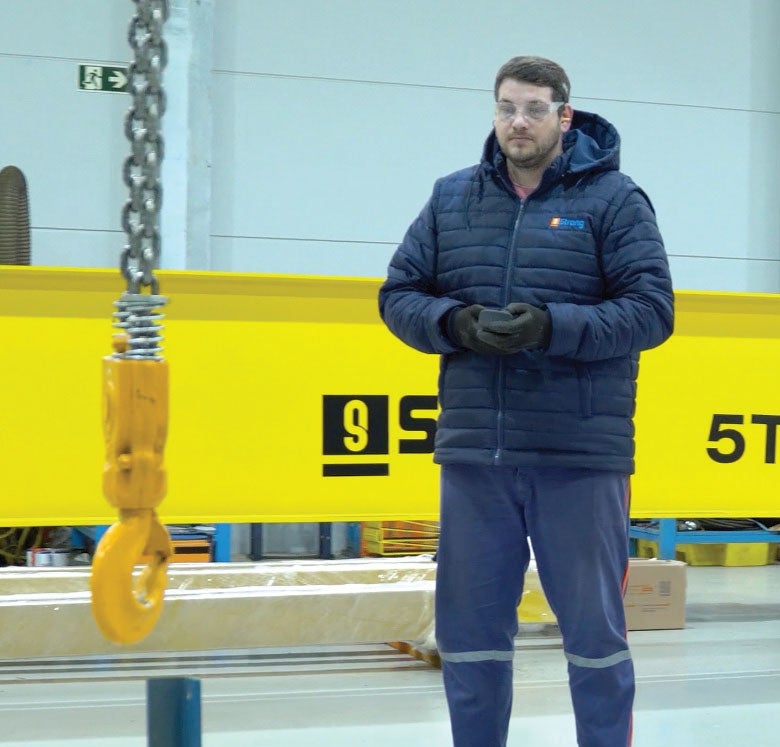
Beside wireless failure there is another, simpler, means by which communication could be interrupted: if the operator trips, or drops the control box, or falls injured on it in such a way that buttons are accidentally pressed or held down. Many manufacturers, therefore, have a so-called ‘Deadman switch’ – more strictly, a push-to-operate switch – that must be held down simultaneously with the relevant operating button to active the command.
Manufacturers have devised other ingenious ways to improve safety. Tele radio systems with the highest safety requirements are certified to PL-d and PL-e levels for the stop function. For these systems, in the receiver there are two stop relays that are monitored by two independent safety microprocessors that operate in parallel and which cross-monitor each other. These stop relays are normally connected in series in order to make sure that the operator retains control of the machine. It means that a single fault will not lead to the loss of the safety function: if one of the microprocessors fails, the machine will stop safely.
Tele radio have a safety feature they call the ‘donut’ range. The transmitter can be set up so that it will function only in a specific work area – for example, not in the immediate vicinity of the machine where it is dangerous, but also not too far away where the user has insufficient visibility. With a wired solution, such functionality would be difficult, if not impossible, to realise. In order to prevent a machine coming under the control of an unauthorised transmitter, the tele radio transmitters use a unique key that is sent via its own software. The start-up procedure itself can be secured by a pin code or proximity detection.
Autec have a three-position ‘enable and stop’ system. Available as an option on their AIR series LK NEO pushbutton radio control models, it allows the machine to start and operate only when the operator holds the button in the middle position. If the button is either fully released or pressed, the machine cannot be started or controlled, and if already running, it will shut down.
The thinking behind it is that machine start-up can occur only as a deliberate action by the operator. If the button is accidently released – due to illness, a fall or sudden unconsciousness – the machine stops immediately. And in panic or stress situations, where the operator might press the button too hard, the machine stops; and the muscle stiffening that follows cases of electrocution will also cause a full button press-down that will trigger shutdown of the system.
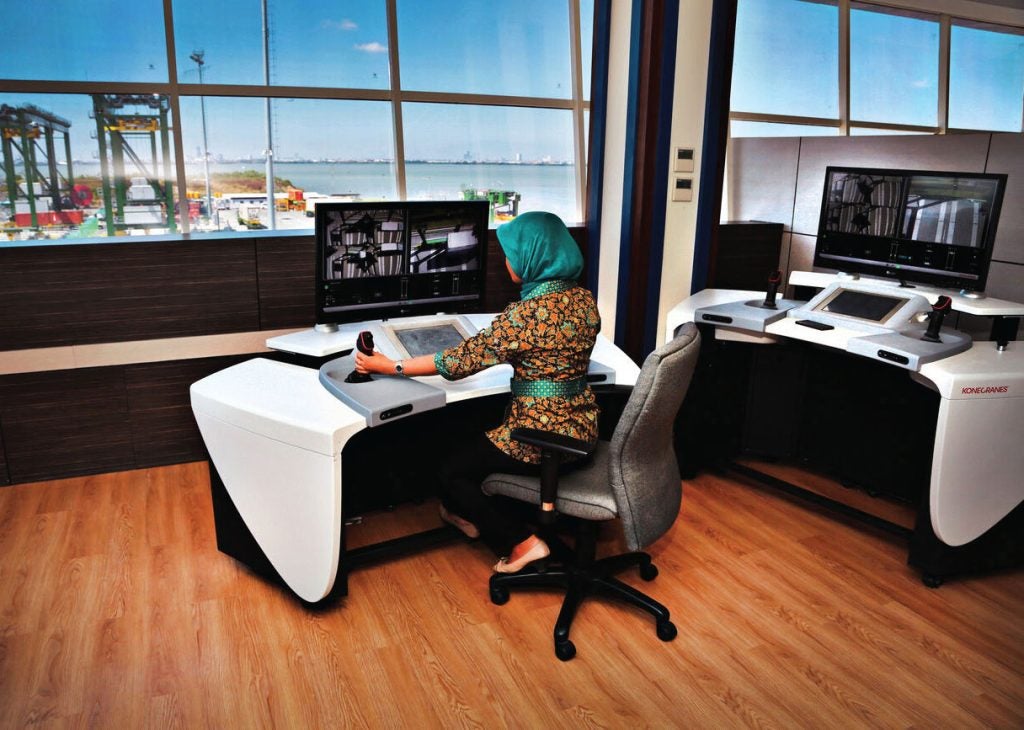
Hand-held and belly-box remote control systems still assume that the operator is standing somewhere near the crane. One reason for this is to give him a clear view of the operation. That proximity, though, is no longer necessary these days. Cameras and video screens can give closer, clearer views, to whatever degree of magnification is wanted, and from various different viewpoints simultaneously. Hence, perhaps the ultimate in crane control systems: the remote operating system.
Video screens show the operator what the crane and the load are doing; a keyboard, or joysticks, tell the crane what to do. The Remote Operating Station is exactly that. Demag have such a system; Konecranes have one also. Given today’s internet connectivity, such systems can be positioned anywhere. They do not have to be near the crane. Instead of a draughty cabin on the crane, it can be in a normal office, with soft chairs and comfort. It can be at the other end of the building from where the crane is; it could be several miles away. It could even be in another city or another country or another continent. The crane operators job can now be carried out efficiently, accurately and now, for the first time, in convenience and comfort as well.


