

As offshore hoisting operations extend into deeper waters and run for longer durations, lifting systems increasingly shape how work is carried out on deck. What was once an occasional hoisting activity becomes a routine condition, and the characteristics of the hoisting line begin to influence where people stand, how tasks are sequenced and how much of the deck remains accessible during operations. Against this backdrop, a new class of synthetic rope systems, such as TechIce with Technora fibres, has begun to change how operators plan and execute hoisting on deck.
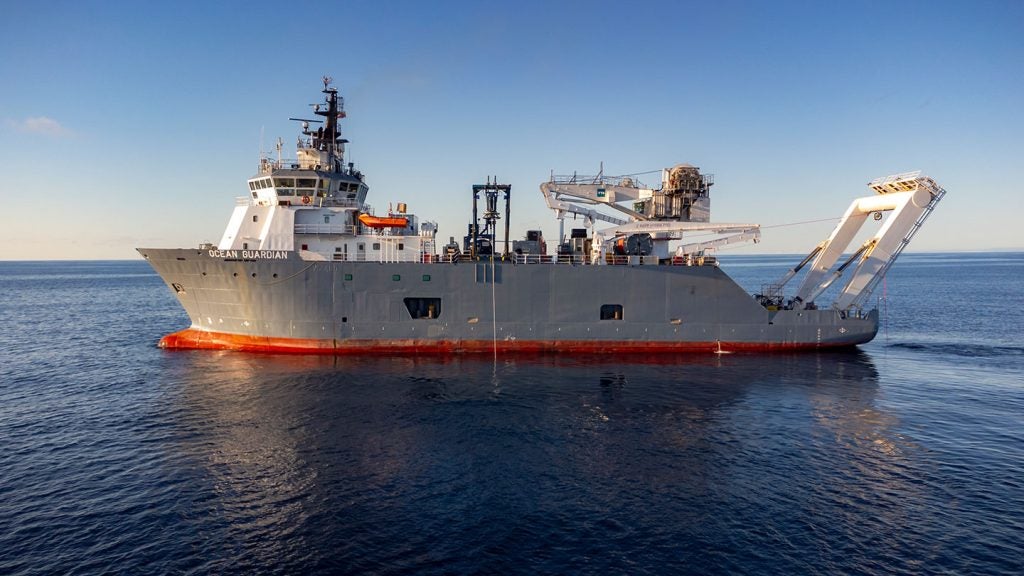
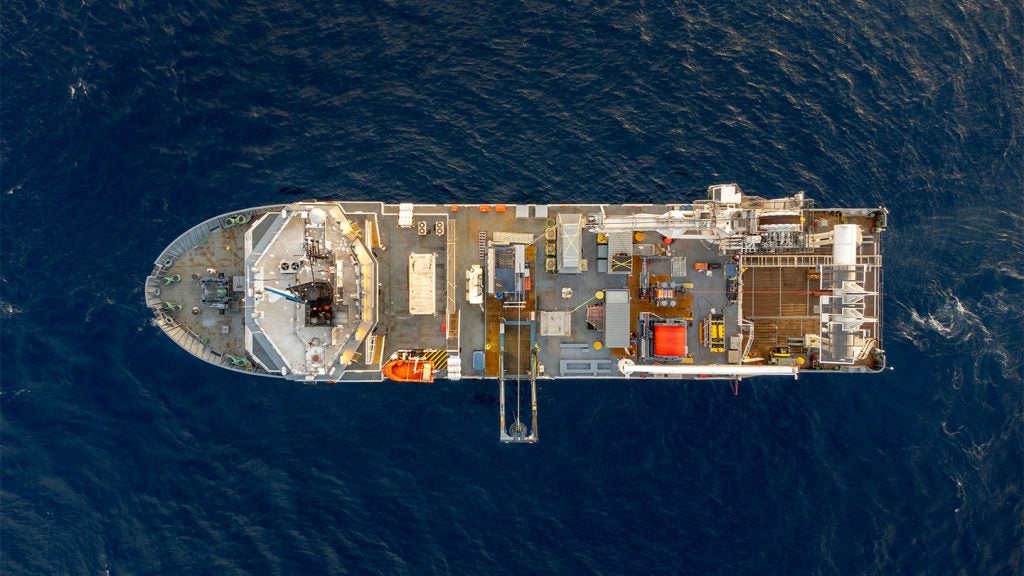
For Stabbert Maritime, a Seattle-based operator of offshore support vessels, this shift became clear during the refit of its multipurpose vessel Ocean Guardian. The vessel was configured for continuous deepwater hoisting operations to depths of 6,000 metres, supporting subsea, survey and scientific work, with lifting systems expected to operate almost daily rather than intermittently.
Steel wire rope, long treated as the standard in offshore hoisting systems, began to dictate operational boundaries. Its behaviour under load constrained crew positioning and deck access, with permanent exclusion zones forcing routine tasks to be organised around separation from the line. With lifts now occurring more frequently, the rope itself began to influence how hoisting work was carried out, not just how it was controlled.
The challenge
Three steel-related conditions defined how crews could work safely around the hoisting system during continuous operations.
Challenge 1: Snap-back limiting deck use
“Snap-back is treated as an assumed condition,” explains Daniel Stabbert, CTO of Stabbert Maritime. “Crews are trained to plan around it, work around it and keep clear of the line whenever it is under load. When you are operating in water depths beyond 4,000 metres, there’s no margin for improvisation around the line.” As a result, deck layout and task sequencing are driven by required separation from the line rather than by operational workflow.
Challenge 2: Lubrication affecting deck conditions
Steel wire requires lubrication to manage wear under load. During hoisting operations, lubricant migrates from the rope onto drums, sheaves and surrounding deck surfaces, necessitating ongoing cleaning and containment measures. As lift cycles accumulate, deck conditions require increased housekeeping attention.
Challenge 3: Line mass limiting handling proximity
At deepwater lengths, steel wire carries substantial self-weight. During spooling, empty-hook recovery and load transitions, this mass increases the energy present in the system and the consequences of uncontrolled movement. As a result, routine handling requires greater separation from the line and limits manual interaction in its vicinity.
In response to these challenges, Stabbert Maritime began looking for an alternative. Incremental adjustments to steel-based systems were assessed but ultimately discounted, as scaling capacity for continuous deepwater hoisting would have required larger winches, increased deck footprint and tighter operating margins, while introducing the risk of schedule loss and commissioning delays during the transition. As Daniel Stabbert explains, “We weren’t trying to chase headline performance. We needed a system that behaved predictably every day instead of one that people had to keep compensating for.”
The alternative was TechIce, a hybrid synthetic hoisting rope manufactured by Hampidjan and incorporating Technora aramid fibres from Teijin Aramid. It supports continuous deepwater duty by delivering predictable fatigue behaviour, thermal stability under cyclic bending and handling characteristics that reduce crew exposure during routine operations.
The solution
The replacement hoisting system was selected using a deliberately cautious acceptance approach, shaped by the safety and operational consequences of failure. Rather than relying on tighter procedures or theoretical performance gains, Stabbert Maritime evaluated alternatives based on how they behaved during routine deepwater operations under representative conditions.
System architecture
To address this operational challenge, Stabbert Maritime turned to Parkburn, an engineering firm specialising in deepwater lifting and hoisting systems designed for continuous duty.
Parkburn designed the deepwater capstan winch that formed the mechanical core of the system. The architecture separates traction from storage and delivers the required lift capability within the vessel’s existing power envelope and deck footprint, without requiring changes to foundations or auxiliary systems.
The fully electric winch is configured for continuous operation with synthetic rope. By limiting stored energy in the system and avoiding assumptions associated with steel wire stiffness and mass, the winch reduces the extent to which hoisting activity influences deck access during operations.
Sam Bull, Business Consultant at Parkburn, explains that the design approach reflects a different set of priorities than traditional steel-based systems. “Designing for continuous duty places emphasis on consistent behaviour over time, rather than on peak performance in isolated lifts,” he states.
He adds that rope performance cannot be understood in isolation: “Real performance is governed by the entire operating environment.”
This systems-based perspective set the context for independent testing later conducted by NORCE Research.
Independent verification
To better understand rope behaviour under system-level conditions relevant to deepwater hoisting, Hampidjan commissioned independent cyclic bend-over-sheave testing through NORCE Research. The testing was conducted at the Mechatronics Innovation Lab using repeated cyclic bending at a defined speed and elevated ambient temperature, without external cooling, to represent sustained operational loading.
Ellen Nordgård-Hansen, Senior Researcher at NORCE Research, explains: “Cyclic bending and heat are the primary drivers of hoisting rope degradation in practice.”
The outcome
For the crew, the difference was immediately noticeable. Spooling and empty-hook recovery settled into routine practice, and line behaviour remained consistent as loads changed. During extended periods of active heave compensation, the rope did not generate the heat or deck contamination typically associated with prolonged hoisting using steel wire.
That consistency influenced how work was organised on deck. With no lubricant transferring onto deck surfaces and lower line mass to manage, the lifting area did not require repeated clearance during operations. Tasks that would normally be delayed or re-sequenced during hoisting were carried out in parallel.
When the system stops dictating the work
The experience on Ocean Guardian shows that deepwater hoisting capability does not inherently require lifting systems to dominate deck organisation. When systems are assembled, evaluated and accepted based on their behaviour during routine use, hoisting activity can be integrated without continually reshaping how work is carried out on deck.
For the technical data underpinning this case — including independent CBoS fatigue results, thermal behavior and strain development under prolonged cycling — visit techice.teijinaramid.com


